• Home
  • Blog
  • Free Library
  • Contact
Menu

Family Therapy Basics

1830 North University Drive
Plantation, FL, 33322
Phone Number
Save Time and LOVE Your Work

Your Custom Text Here

Family Therapy Basics

  • Home
  • Blog
  • Free Library
  • Contact

Free Resources for Therapists and Counselors During the COVID-19 Coronavirus Pandemic

March 31, 2020 Ili Rivera Walter, PhD, LMFT
Free Resources for Therapists and Counselors During COVID-19

Since the coronavirus tipping point, I have been spending more time on social media, in my effort to stay connected with loved ones and stay up to date on therapy-related news.

Friends and colleagues have been sharing state and national updates regarding telehealth regulations, as well as resources for staying refreshed (in life and work) during this time of social distancing. I’m including a roundup of these resources in this post. (I sent these resources to my email subscribes last week, and I’ve updated the list since then. (If you’re not on my email list, and want to be, subscribe here.)

April Events

Esther Perel Live Webinars

Starting Wednesday, April 1st, Esther Perel will present the first of a four-part series on “the current normal, what it means for your relationships, and how you can move forward in a time of physical distancing, uncertainty, and grief.”

Each conversation will be broadcast live on Facebook and Youtube on Wednesdays at 3pm Eastern between April 1-22. Learn more, and RSVP, here.

Free Community Support (Refreshed Therapist Network)

I am gently facilitating online community support meetings for therapists, on April 10 + 24, at 11 am Eastern. The meetings are collaborative, inviting reflection, questions, and whatever comes up for participants. If you’d like to join the meeting, learn more, and RSVP, on the event page on Facebook, or the event page in the Mighty Networks community.

Apps for Therapists

Downdogapp.com

Down Dog is offering a free membership to all its fitness apps until May 1, 2020. For students and teachers with a dot edu email account, and healthcare workers (that’s us!) the free membership will last until July 1, 2020. Sign up via the link above.

Peloton app

Peloton is offering a free 90-day trial to their at-home fitness app. No bike needed. The app includes yoga, strength training, and more. Check out the app, and sign up, here.

HeadSpace

The meditation app, HeadSpace, is offering health care professionals a free Plus account for the remainder of 2020. To register, you must have an NPI number. Learn more, and sign up here.

TenPercent.com

Health care professionals are able to register for free use of the Ten Percent Happier app, for six months. Learn more about the app, and register here.

TryHealthyMinds.org

Ensure your emotional wellbeing during this time, by training your mind. Healthy Innovations is offering free access to their healthy minds program app. There is no fee, and there are no requirements. Sign up via the link above.

For Your Aural Enjoyment

Audible Stories

Ok. Technically, Audible Stories is for kids. But, you will find books in a variety of languages (in case you’d like to begin learning a language), as well as literary classics. No registration required. Take a look at the selection.

Also, as a friendly reminder, Audible offers a 30-day free trial. If you like listening to your books, get started, here.

Esther Perel

A new four-part series with “couples under lockdown,” has begun on the podcast, Where Should We Begin. To listen to this new coronavirus-themed series, or to catch up on past episodes, click here.

Free One-Year Directory Listing, for Christian Counselors

The American Association of Christian Counselors (AACC) is offering a free one-year listing in their Christian Care Connect directory, with code D2C2020. The listing typically costs $249 per year. If you’d like to learn more and sign up, click here.

Telehealth Resources

Many therapists have moved, or are working toward moving, their sessions online. The following are updates and resources relevant to telehealth/online therapy during COVID-19.

National Policy on HIPAA

The Office of Health and Human Services announced “enforcement discretion” for telehealth services during the COVID-19 crisis. “This exercise of discretion applies to widely available communications apps, such as FaceTime or Skype, when used in good faith for any telehealth treatment or diagnostic purpose, regardless of whether the telehealth service is directly related to COVID-19.”

To view the full policy, visit this page.

State By State Telehealth Policy

Utilize the interactive 50 state legislation and regulatory tracking tool to browse telehealth legislation and regulation across the nation. See the map.

Free PESI Training

PESI is offering a 12 credit hour telehealth training, for free, with code TELEFREE. If you’re interested, go to this checkout page.

Steps:

  • Add the training to your cart

  • Sign in, or create an account

  • Add “TELEFREE” to the discount code area

Once you checkout, the training will be added to your account, allowing you to view it at any time.

Free Telehealth Platform

CarePaths EHR is offering free access to their telehealth platform “during the COVID-19 crisis.” Learn more and sign up.

Recent Articles + Guides from Therapist Colleagues

The following articles and guides have been published during this epidemic; they include essential information on documentation and overall preparedness during COVID-19.

COVID-19 Coronavirus Resources for Mental Health Therapists, QAPrep

COVID-19 Plan for Therapists: Questions, Answers, and Guidelines, ZynnyMe

COVID-19 and Your Practice, Abundance Practice Building

Coronavirus (COVID-19) Telehealth Resources for Therapists in Private Practice, Private Practice Startup

I hope these resources are helpful as you continue navigating changes to your life and work. If you have a resource that could benefit colleagues, please contact me, and I will share it on social media, or inside the RTN community.
More free time to peruse the free library? Sign up for access below!


RELATED POSTS
How to Keep Your Therapy Communications Secure, While Working Remotely: An Interview with iplum CEO Pankaj Gupta

Pankaj Gupta, CEO of iPlum, joins me for this post. I interview him about iPlum’s mission, the services the company offers, as well as why iPlum is the right fit for therapists in private practice.

If you haven’t already read Part 1 of my partnership with iPlum, see the five benefits of using a HIPAA-compliant phone solution.

Read more →
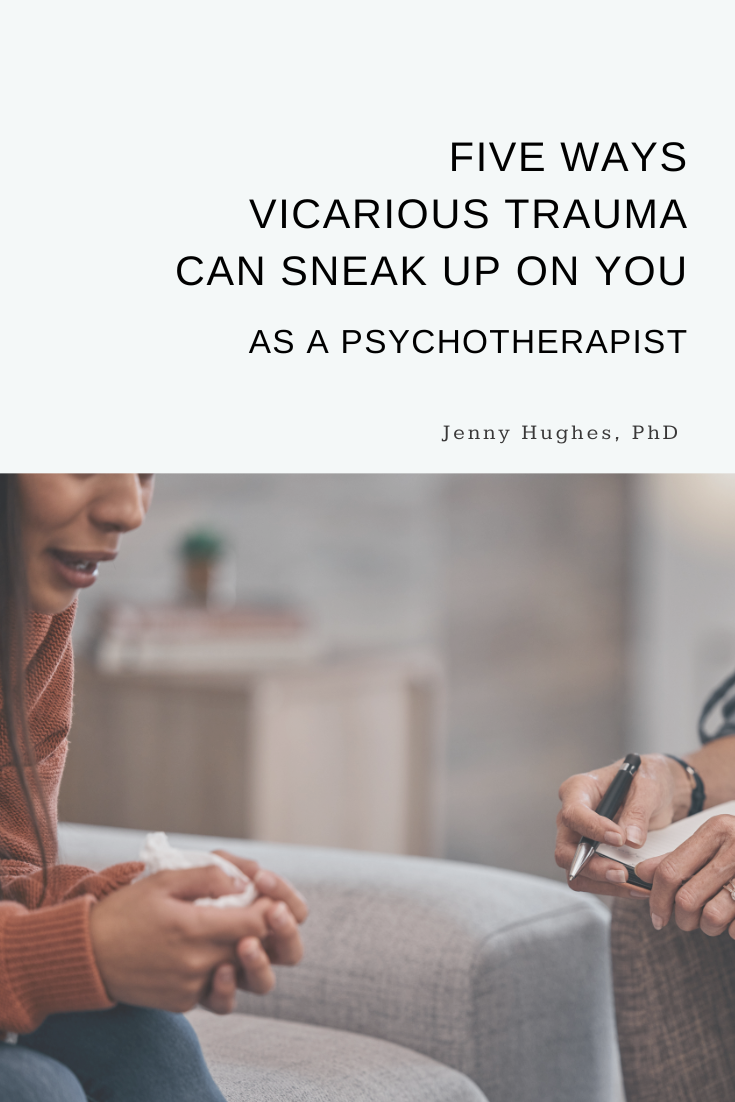
5 Ways Vicarious Trauma Can Sneak Up on You as a Psychotherapist

Vicarious trauma is a term that is not unfamiliar to most therapists. Many of us were warned about VT in grad school, have attended self-care workshops that promised to resolve the effects of VT, or have simply resigned ourselves to white-knuckling it through each day. But do you really know how to identify vicarious trauma? Can you pick up on sneaky warning signs that VT is already present in your life? 

Read more →
When You Don’t Want To Do Therapy Anymore: Ten Tips for Rekindling Career Energy, for Therapists Who Are Burned Out

Recently, I published two articles on the topic: Reasons why therapists are leaving the mental health field. In them, I covered ten of the most common reasons therapists are choosing to change their career path. (If you’d like to read those posts, here are the links to part one and part two.)

There are many therapists who are living through challenges in their work and career, and yet have not chosen to, or do not want to, leave the field. If this describes you, then keep reading for ten steps that will help you rekindle some career energy.

Read more →
Five More Reasons Why Therapists Are Leaving The Mental Health Field

In this post, I continue listing reasons why therapists are considering leaving the mental health field, because there are many. And, if you are one of the therapists considering leaving the field, please know: You are not alone. If you missed the first post on this topic, head here, and read that first.

Read more →
Five Reasons Therapists Are Leaving the Mental Health Field

Each week, I coach at least one therapist who mentions that they are considering leaving the therapy field. This sentiment seems to have increased among psychotherapists in the past two years with challenges related to COVID (for therapists and clients), including a) sickness, b) working from home, c) relational and family transitions, among others.

Of course, each therapist has their own particular reasons for their desire to leave their profession. Also, from my interaction with thousands of therapists each week, I have noticed several common challenges emerge in conversations about leaving the field.

Read more →
How to Find and Live The Refreshed Therapist Life

As a clinical supervisor and consultant to therapists, I meet many clinicians who find themselves burned out, bored, or numb after years of showing up for their clients, and neglecting, to some degree, to show up for themselves. The reality of our work is that in order to sustain and enjoy it, we must intentionally deal with the nuances of what it means to function as a therapist inside and outside the therapy room.

As therapists, we have the opportunity to be vocal about the ways we live out the intersection of life and work. Our voices generate more expansive and encouraging conversations that can lead to a sense of flow in navigating our personal and therapist selves.

Read more →
How To Engage In Social Media Self Care: Eight Steps For Therapists

Social media posting is a must if you’re a therapist marketing a private practice. Even if you’re not a business owner, you may find that your social media is taking up more time than you’d prefer (gentle nudge: How’s your screen time report looking this week?).

Hey—like therapy, this is a judgment-free zone. It is also a “let’s be our best selves” zone. And, to show up as our best selves, self care is essential.

Read more →
Technology-Assisted Clinical Supervision: Benefits, Challenges, and Regulations

If you’re a clinical supervisor navigating the delivery of supervision right now, you may have encountered some challenges, including state, institutional, and technological limitations. The information I present in this post is intended to encourage the legal and ethical use of technology-assisted (distance) supervision in a variety of settings.

Dr. AnnaLynn Schooley and I recently discussed this subject as it relates to our experiences and our development as supervisors. Dr. Schooley is a LMFT and LMHC in the state of Florida, and carries licenses in additional states. She serves as a supervisor for master and doctoral-level MFT students in her role as professor for Capella University.

Read more →
Start on Time, End on Time: HOW TO MANAGE Your Private Practice THERAPY Sessions

Whether you’re 6 or 60, there’s one thing everyone hates when going to the doctor; and no, it’s not getting pricked with needles. It’s waiting to get pricked with needles. Your appointment is at 2, but as 2, 2:05, 2:10 rolls by, you ruminate “I had an appointment. If the doctor wasn’t going to be available, why schedule at this time? Apparently, my time isn’t valuable.”

As our lives are perhaps more rushed than ever, waiting for any appointment or meeting is a hassle. However, a tardy counseling session is qualitatively worse than other late meetings. Getting started late is a broken promise in a relationship that needs trust in spades.

Read more →
The Problem With Loving Your Work: The Role Of Expectations, Wages, and Passion

Recently, I’ve been thinking about the role of work in my life, as well as how I relate to work. This train of thought naturally leads to evaluating how well I am doing engaging with people (and myself) as more than a worker.

How much time and mental energy does my work take from me, or give to me?

How much of my drive and motivation does my work inspire?

These are a few of the questions I am asking in order to continue my mission for myself and other therapists: To live and work well.

Read more →
Three Ways to Be A Leader Who Lasts

What does it take to be a leader? Thousands of words have been written on the topic. Here’s the truth: there’s no magic formula.  But I do suggest three important elements to work on over time: Know yourself, know your purpose, and know your people. How to live that out will differ for every leader and every setting.

Read more →
Mindfulness Tips for Therapists, for Work and Life

Mindfulness is popular.

You likely have worksheets, lessons, techniques, and theories that help your clients understand mindfulness and its benefits.

You understand mindfulness and its benefits.

But, as we therapists know, sometimes understanding doesn’t foster motivation, or change. The fact is, therapists struggle to implement mindfulness, along with a “self-caring” lifestyle (Kissil and Niño, 2017).

Read more →
Tags new, roundup
← The Importance of Using Metaphors and Metaphoric Tales as a Therapeutic InterventionFamily Therapy Basics Research RoundUp: Winter 2020 →
Interested in information that clarifies, simplifies, and enhances your therapy work? You're in the right place. Learn more . . .

Interested in information that clarifies, simplifies, and enhances your therapy work?  You're in the right place.  Learn more . . .


S A Y H E L L O


S U P P O R T T H E B L O G

DONATE ANY AMOUNT

B L O G S P O N S O R S

Thera-link | Family Therapy Basics

A F F I L I A T E S


P O P U L A R  P O S T S

Blog
10 Therapist (and Child)-Approved Activities to Support Kids with Anxiety

If you’re a mental health professional working with children, you will probably agree that many of the calls you receive from parents have something to do with anxiety or stress. Child therapists have the amazingly important yet challenging task of educating and supporting kids in a therapeutic setting that is both productive and fun. When working with children as young as preschool age, it can be a very daunting task to keep things fresh and exciting week after week! So, how do we help children develop the coping skills they need while keeping them engaged (and not glancing at their watch)? Here are ten therapist (and child!)-approved, fun activities that address anxiety-based disorders and promote relaxation and stress reduction in children:

Read more →
The Art and Science of Therapy as Craft, Part 2:  Crafting Questions
The Art and Science of Therapy as Craft, Part 2: Crafting Questions

For this week's video chat, Dr. AnnaLynn Schooley returns to discuss therapy questions as an intentional craft, and she covers four basic question types:  single answer, open, closed, relational, and circular.

Read more →
Therapist Self-Disclosure Simplified

Self-disclosure is a touchy subject among therapists. Some therapists never self-disclose, while others feel stifled by having a rigid boundary around self-disclosure.  As I consider self-disclosure in therapy, I ask myself, “When is self-disclosure appropriate?”  “How does self-disclosure deepen the therapist-client connection?"

Read more →
Solution Focused Brief Couples Therapy Tips, with Elliott Connie

Elliott Connie is a Solution Focused Brief Therapy (SFBT) practitioner, author, and speaker.  He developed an approach to couples work that distills the essence of SFBT into guiding principles for working with couples. 

As a therapist who loves working with couples, I am always interested in ways to enhance my couples therapy skills.  For this reason, I invited Elliott to explain the reasons why SFBT is his choice for working with clients, as well as how it creates a contrasting experience for couples that have a history in therapy.

Read more →
Family of Origin Exploration for the Therapist:  How to Create Your Genogram
Family of Origin Exploration for the Therapist: How to Create Your Genogram

In article three of the Family of Origin for the Therapist series, you learned 3 simple steps for how to begin family of origin (FOO) exploration:  1) read Bowen’s chapter, 2) observe your FOO experience, and 3) reflect on what you learned. Hopefully, your curiosity has led to significant understanding.

Understanding is the foundation of Bowen Family Systems Theory (BFST). Bowen (1985) believed that if clients could understand themselves as members of their FOOs and as created by their histories, they could begin and continue significant change. 

In today’s post, I offer the next step in developing understanding:  Creating your genogram. I explain how to create a basic genogram that you can expand as you continue your exploration.  

Read more →
5 Tips for Keeping Up with Therapy Paperwork

In my interaction with therapists as a mentor and supervisor, I’ve learned that one of the main struggles therapists face is having too much work and not enough time. Many therapists find themselves overwhelmed by documentation responsibilities, in particular; this includes completing client notes, referrals, billing, treatment plans, etc.

In today’s post, I offer several strategies for keeping up with paperwork, so that you can stay on track and avoid the stress of falling behind.

Read more →
Solution-Focused Brief Therapy Client Types, and Their Relevance To Every Session

In her 1989 article, Of Visitors, Complainants, and Customers, Insoo Kim Berg details three types of “client-therapist relationships” (p. 21). Her wording is significant, because she is not labeling clients; she is describing them in terms of their relationship to the therapist, the process of therapy, and the problem. These three relationships have undergirded Solution-Focused Brief Therapy theory and interventions over the years, although they are not consistently discussed in newer works. The client relationship types are widely applicable to therapy, regardless of theoretical orientation, making them one of the most useful concepts in marriage and family therapy.

In this post, I present a review of these client types, and I explain their relevance to and usefulness for all therapeutic sessions.

Read more →
How to Ethically Offer Coaching as a Licensed Therapist:  A Step-By-Step Guide
How to Ethically Offer Coaching as a Licensed Therapist: A Step-By-Step Guide

One of the most common professional goals for my clients is expanding their private practice to include life coaching services. As professionals with a depth of knowledge in personal development and goal achievement strategies, therapists are ideal candidates for the coaching profession. Despite this near perfect fit, there are some important ethical consideration for therapists when offering coaching services alongside therapy, or when choosing to become professional coaches. In this post, I focus on offering solutions for these complications, in an effort to help you ethically practice coaching.

Read more →
5 Step Plan for De-escalating an In-Session couple Argument

Most of us, therapists, have been there:  A simple disagreement turns into an all-out screaming match in the middle of a therapy session. This is, thankfully, not a common scenario for most therapists, but it’s also not rare--especially for therapists who specialize in couple therapy.

In this post, I cover steps for disrupting an argument occurring in a couple therapy session. Intervention on the part of the therapist is necessary during some conflicts, because the arguments can cause further damage in the couple relationship. And, if therapists allow arguments to continue for too long, they can affect the couple’s sense of safety when in therapy.

The main goals of intervention in this case are to:

Read more →

#5 on Feedspot's Top 40

 Family Therapy Blogs

T O O L S  WE  L O V E

SEE THE LIST

I N S T A G R A M

@driliwalter

I was speaking with a couple this week, and the wife explained that she retaliated toward her husband, because she wanted him to feel the way she feels when he does the same thing to her.

Of course, when we feel unheard, we will result to desperate
Focusing on changing our partner is a waste of energy. We can make requests and express our desires, but when this turns into consistent criticism, it harms everyone involved.

Oftentimes, wanting to change another stems from our own unhappiness. Ins
Sure, it makes sense that when spouses are best friends, the first thing we wonder is if they are isolating from having interests outside their relationship. In reality, many couples who are each other's best friends do enjoy separate activities and
Safe connection is a gift that heals us. ♥️
@realterryreal

COPYRIGHT 2016, FAMILY THERAPY BASICS | ALL RIGHTS RESERVED

ABOUT SUBMISSIONS PARTNERSHIPS

copyright © 2016-2025 | Family Therapy Basics | All Rights Reserved | Legal, Privacy, + Disclaimer | Site Credits, Affiliations, + Stuff