
• Home
  • Blog
  • Free Library
  • Contact
Menu

Family Therapy Basics

1830 North University Drive
Plantation, FL, 33322
Phone Number
Save Time and LOVE Your Work

Your Custom Text Here

Family Therapy Basics

  • Home
  • Blog
  • Free Library
  • Contact

Appreciative Inquiry: How to Facilitate "Powerfully Positive" Change in Therapy

March 14, 2017 Ili Rivera Walter, PhD, LMFT
Appreciative-Inquiry-How-to-Facilitate-Powerfully-Positive-Change-In-Therapy

Appreciative Inquiry (AI) is an approach to change that invites "what gives life" to people and systems to be noticed, discussed, and owned.  This specific style of inquiry involves, "the art and practice of asking questions that strengthen a system’s capacity to apprehend, anticipate, and heighten positive potential” (Cooperrider & Whitney, 2005). The goal of AI is to build an appreciation--a positive core--within groups.

Cooperrider and Whitney (2004) developed the 4D model of Appreciative Inquiry, which involves (as you may have guessed) four steps:  Discovery, Dream, Design, and Destiny.  These steps, as well as the guiding principles of AI, can be used with one person, families, or large groups--within the therapeutic environment, community gatherings, or organizations--in order to generate “commitment to change” that flows from the foundation of caring conversation (Cooperrider & Whitney, 2005).  

The 4D Model of Appreciative Inquiry (AI) is traditionally used for working with organizations, but, according to one of its founders, David Cooperrider, it is also applicable to working with any number of participants.  This makes AI (founded on systems theory) worthy of consideration for the therapeutic context.

Appreciative Inquiry:  The 4 Ds of the 4D Model

The context for the 4 Ds is the appreciative interview.  Because the 4D process relies on inquiry, AI practitioners utilize carefully crafted questions to stimulate dialogue at each stage of the process.

Discovery:  During this initial step, inquiry is focused on identifying and detailing the “positive core” of participants, and/or their larger system (e.g., the mother of the family, as well as the family as a whole).  By generating dialogue about the "root causes of [their] success,"  AI practitioners assist participants in recognizing and discussing this positive core (Cooperrider & Whitney, 2005).  

Dream:  Through vision, curiosity, inspiration, etc., meeting participants imagine a shared future.  This future, and all other D’s, is detailed as participants answer “positively powerful questions” that bring the dream, available resources, and new ideas to life (CPC, 2015).

Design:  Dreaming naturally gives way to design, which is a process of challenging the status quo in order to understand the steps necessary to create the dream and bring the “positive core” to life.  The design incorporates future images of what might be, grounded in real examples from the past (CPC, 2015; Cooperrider & Whitney, 2005).

Destiny:  Participants are invited to collectively plan the the design of their dream.  Through the experience of collective destiny, as well as the first three steps in the 4D process, participants are able to take personal responsibility for living in, inviting, and continuously creating the dream, by aligning their actions and decisions with their collectively decided future (Cooperrider, 2012). 

Appreciative Inquiry:  The Practitioner's Process

Now that you know the steps of the 4D Model of AI (the what), I'll explain the process of facilitation, and what is required from AI practitioners (the how).

Inquiry:  Through asking questions that elicit stories of success and collective vision, practitioners create opportunities for participants to experience positive emotions and interaction.   By listening and observing, as well as interviewing, practitioners show care for participants and their stories (CPC, 2015).  This creates a safe space, as well as a culture of appreciation within the meeting.

AI practitioners believe that “all you have to do is ask”  (CPC, 2015).  People have beliefs, hopes, stories of success to share, and those resources can remain hidden without practitioners' "powerfully positive questions" (CPC, 2015).  

"Knowing that questions are fateful, appreciative leaders . . . embed values in questions, and 'flip''negative issues into positive questions, thereby fostering new organizational and community realities" (CPC 2015).

Illumination:  Illumination involves highlighting and affirming abilities, and thereby inviting team members to see differently--to see not only their abilities, but also the abilities of others.  This generates confidence and courage among participants.  

“[Illumination] involves the conscious cultivation of positive dialogue, a commitment to discovering the root causes of success, and the practice of appreciative coaching to bring out the best in others," (CPC, 2015) 

Through illumination, practitioners activate an ongoing process of seeking, seeing, sharing, and aligning (CPC, 2015).

Inclusion:  AI practitioners treat every participant and communication within the meeting as valuable and necessary.  

"In order for decisions and plans for the future to satisfy and serve diverse groups of people, all the people whose future it is must be invited into relationship within the meeting and included in dialogue and decision-making" (CPC, 2015).

Inspiration:  Inspiration is the path to awakening participants' new vision and chosen possibilities for the future.  

Through the strategy of inspiration, practitioners help people transcend the harsh realities of the world, organizing instead to a life-affirming purpose that supports the greater good.  This often involves sharing uplifting stories, being generous with appreciation, and encouraging others to do the same" (CPC, 2015).

Integrity:  AI practitioners lead with integrity--they give their best to the meeting and all participants, and they expect each participant to do the same, in the present and the future.  This catalyzes a sense of responsibility toward a higher purpose (dream) during the 4D process, and helps to foster a new modus operandi for participants, which, in turn, creates change in their larger systems.

Summary

In this post, I've provided a quick overview of Appreciative Inquiry and the 4D model.  The process of inquiry at every stage for AI practitioners is complex, and takes immersion in AI language as well as its particular style of questioning.  If this model resonates with you, take a look at these free resources on AI, and learn more via the resources found below.


References

Cooperrider, D., & Whitney, D. (2005).  Appreciative inquiry:  A positive revolution in change. San Francisco, CA:  Barrett-Koehler Publishers.

Cooperrider, D., & Whitney, D., Stavros, J. M. (2008).  The Appreciative Inquiry handbook:  For leaders of change.  San Francisco, CA:  Barrett-Koehler Publishers.

Cooperrider, D. (2012).  What is appreciative inquiry?  Retrieved from:  http://www.davidcooperrider.com/ai-process/#

Corporation for Positive Change (2015).  Appreciative Inquiry.  Retrieved from:  https://positivechange.org/how-we-work/appreciative-inquiry-ai/


Let's Chat

  • What concept of Appreciative Inquiry are you interested in trying, and in what context?

  • What one thing stands out to you about the 4D model?

RELATED POSTS
How To Address Therapy Clients' "Undercurrents" and Stress In Therapy

Feeling confident when offering therapy to families is a goal for many therapists and counselors. When we face the limitations of an individual perspective on treatment, we are left to wonder, “What theory, or techniques, can help this client comprehensively?”

Dr. Scott Sells explains two techniques from the Family Systems Trauma Model (FST) that will reframe family problems and help lead to second-order change. FST is applicable to your work whether you see individuals, couples, or families.

Read more →
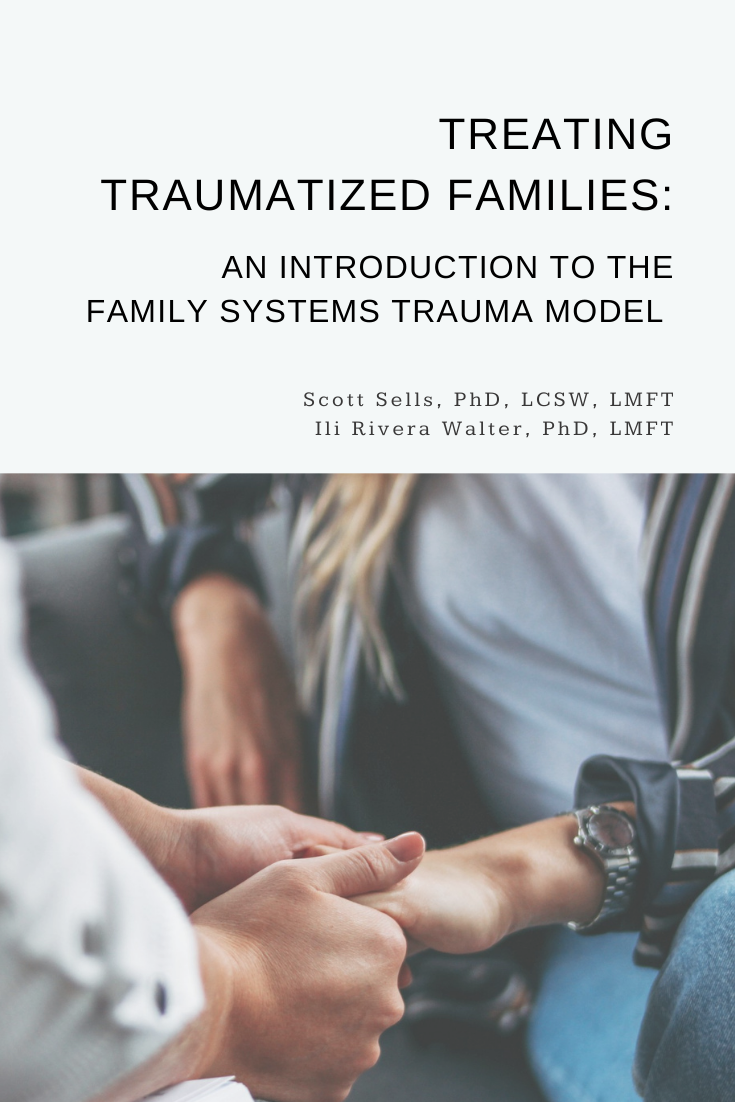
Treating Traumatized Families: An Introduction to the Family Systems Trauma Model (FST), with Dr. Scott Sells

Dr. Scott Sells, PhD, LCSW, LMFT is my interview guest for this post. He is the founder of the Family Systems Trauma Model, and the Family Trauma Institute, as well as the author of three books on methods for treating families and children, within the context of family therapy.

By watching this video, or reading the transcript, you will learn:

  • A working definition of the term traumatized family

  • Three essential steps you may be missing in your clinical work with families.

  • One thing you can do right now to improve engagement and outcomes with your family clients.

  • How to learn more techniques that will reinvent your family therapy work.

Read more →
The Importance of Using Metaphors and Metaphoric Tales as a Therapeutic Intervention

Metaphor is a figure of speech that consists of naming, describing, or qualifying something through its similarity or analogy to something else. It’s not just about songwriting or poetry-- we use metaphors all the time. After all, we all “fall in love” or “get stuck” at some point in our lives.

In the psychoanalytic approach, metaphors have always been very important, since the unconscious mind is

Read more →
Are Gottman Method and Emotionally Focused Therapy (EFT) Compatible?

Couples counseling today is so much more effective than in decades past.  There is almost too much information out there to guide therapists. It can be overwhelming.  

I have seen many discussions about two of the main therapeutic models for couple therapy:  Sue Johnson’s Emotionally Focused Couple Therapy, and John and Julie Gottman’s Gottman Method.  The discussion can be, like so many discussions, very polarized at times. But there is such a richness and joy to learning from both (not to exclude all of the other contributors to the field right now) that the idea of folding together some of what these models offer seems inevitable.

Read more →
In Theory
← Family of Origin Exploration for the Therapist: How to Add Relational Dynamics to Your GenogramSelf Care: 4 Signs It's Time to Take Care of Yourself →
Interested in information that clarifies, simplifies, and enhances your therapy work? You're in the right place. Learn more . . .

Interested in information that clarifies, simplifies, and enhances your therapy work?  You're in the right place.  Learn more . . .


S A Y H E L L O


S U P P O R T T H E B L O G

DONATE ANY AMOUNT

B L O G S P O N S O R S

Thera-link | Family Therapy Basics

A F F I L I A T E S


P O P U L A R  P O S T S

Blog
10 Therapist (and Child)-Approved Activities to Support Kids with Anxiety

If you’re a mental health professional working with children, you will probably agree that many of the calls you receive from parents have something to do with anxiety or stress. Child therapists have the amazingly important yet challenging task of educating and supporting kids in a therapeutic setting that is both productive and fun. When working with children as young as preschool age, it can be a very daunting task to keep things fresh and exciting week after week! So, how do we help children develop the coping skills they need while keeping them engaged (and not glancing at their watch)? Here are ten therapist (and child!)-approved, fun activities that address anxiety-based disorders and promote relaxation and stress reduction in children:

Read more →
The Art and Science of Therapy as Craft, Part 2:  Crafting Questions
The Art and Science of Therapy as Craft, Part 2: Crafting Questions

For this week's video chat, Dr. AnnaLynn Schooley returns to discuss therapy questions as an intentional craft, and she covers four basic question types:  single answer, open, closed, relational, and circular.

Read more →
Therapist Self-Disclosure Simplified

Self-disclosure is a touchy subject among therapists. Some therapists never self-disclose, while others feel stifled by having a rigid boundary around self-disclosure.  As I consider self-disclosure in therapy, I ask myself, “When is self-disclosure appropriate?”  “How does self-disclosure deepen the therapist-client connection?"

Read more →
Solution Focused Brief Couples Therapy Tips, with Elliott Connie

Elliott Connie is a Solution Focused Brief Therapy (SFBT) practitioner, author, and speaker.  He developed an approach to couples work that distills the essence of SFBT into guiding principles for working with couples. 

As a therapist who loves working with couples, I am always interested in ways to enhance my couples therapy skills.  For this reason, I invited Elliott to explain the reasons why SFBT is his choice for working with clients, as well as how it creates a contrasting experience for couples that have a history in therapy.

Read more →
Family of Origin Exploration for the Therapist:  How to Create Your Genogram
Family of Origin Exploration for the Therapist: How to Create Your Genogram

In article three of the Family of Origin for the Therapist series, you learned 3 simple steps for how to begin family of origin (FOO) exploration:  1) read Bowen’s chapter, 2) observe your FOO experience, and 3) reflect on what you learned. Hopefully, your curiosity has led to significant understanding.

Understanding is the foundation of Bowen Family Systems Theory (BFST). Bowen (1985) believed that if clients could understand themselves as members of their FOOs and as created by their histories, they could begin and continue significant change. 

In today’s post, I offer the next step in developing understanding:  Creating your genogram. I explain how to create a basic genogram that you can expand as you continue your exploration.  

Read more →
5 Tips for Keeping Up with Therapy Paperwork

In my interaction with therapists as a mentor and supervisor, I’ve learned that one of the main struggles therapists face is having too much work and not enough time. Many therapists find themselves overwhelmed by documentation responsibilities, in particular; this includes completing client notes, referrals, billing, treatment plans, etc.

In today’s post, I offer several strategies for keeping up with paperwork, so that you can stay on track and avoid the stress of falling behind.

Read more →
Solution-Focused Brief Therapy Client Types, and Their Relevance To Every Session

In her 1989 article, Of Visitors, Complainants, and Customers, Insoo Kim Berg details three types of “client-therapist relationships” (p. 21). Her wording is significant, because she is not labeling clients; she is describing them in terms of their relationship to the therapist, the process of therapy, and the problem. These three relationships have undergirded Solution-Focused Brief Therapy theory and interventions over the years, although they are not consistently discussed in newer works. The client relationship types are widely applicable to therapy, regardless of theoretical orientation, making them one of the most useful concepts in marriage and family therapy.

In this post, I present a review of these client types, and I explain their relevance to and usefulness for all therapeutic sessions.

Read more →
How to Ethically Offer Coaching as a Licensed Therapist:  A Step-By-Step Guide
How to Ethically Offer Coaching as a Licensed Therapist: A Step-By-Step Guide

One of the most common professional goals for my clients is expanding their private practice to include life coaching services. As professionals with a depth of knowledge in personal development and goal achievement strategies, therapists are ideal candidates for the coaching profession. Despite this near perfect fit, there are some important ethical consideration for therapists when offering coaching services alongside therapy, or when choosing to become professional coaches. In this post, I focus on offering solutions for these complications, in an effort to help you ethically practice coaching.

Read more →
5 Step Plan for De-escalating an In-Session couple Argument

Most of us, therapists, have been there:  A simple disagreement turns into an all-out screaming match in the middle of a therapy session. This is, thankfully, not a common scenario for most therapists, but it’s also not rare--especially for therapists who specialize in couple therapy.

In this post, I cover steps for disrupting an argument occurring in a couple therapy session. Intervention on the part of the therapist is necessary during some conflicts, because the arguments can cause further damage in the couple relationship. And, if therapists allow arguments to continue for too long, they can affect the couple’s sense of safety when in therapy.

The main goals of intervention in this case are to:

Read more →

#5 on Feedspot's Top 40

 Family Therapy Blogs

T O O L S  WE  L O V E

SEE THE LIST

I N S T A G R A M

@driliwalter

I was speaking with a couple this week, and the wife explained that she retaliated toward her husband, because she wanted him to feel the way she feels when he does the same thing to her.

Of course, when we feel unheard, we will result to desperate
Focusing on changing our partner is a waste of energy. We can make requests and express our desires, but when this turns into consistent criticism, it harms everyone involved.

Oftentimes, wanting to change another stems from our own unhappiness. Ins
Sure, it makes sense that when spouses are best friends, the first thing we wonder is if they are isolating from having interests outside their relationship. In reality, many couples who are each other's best friends do enjoy separate activities and
Safe connection is a gift that heals us. ♥️
@realterryreal

COPYRIGHT 2016, FAMILY THERAPY BASICS | ALL RIGHTS RESERVED

ABOUT SUBMISSIONS PARTNERSHIPS

copyright © 2016-2025 | Family Therapy Basics | All Rights Reserved | Legal, Privacy, + Disclaimer | Site Credits, Affiliations, + Stuff