• Home
  • Blog
  • Free Library
  • Contact
Menu

Family Therapy Basics

1830 North University Drive
Plantation, FL, 33322
Phone Number
Save Time and LOVE Your Work

Your Custom Text Here

Family Therapy Basics

  • Home
  • Blog
  • Free Library
  • Contact

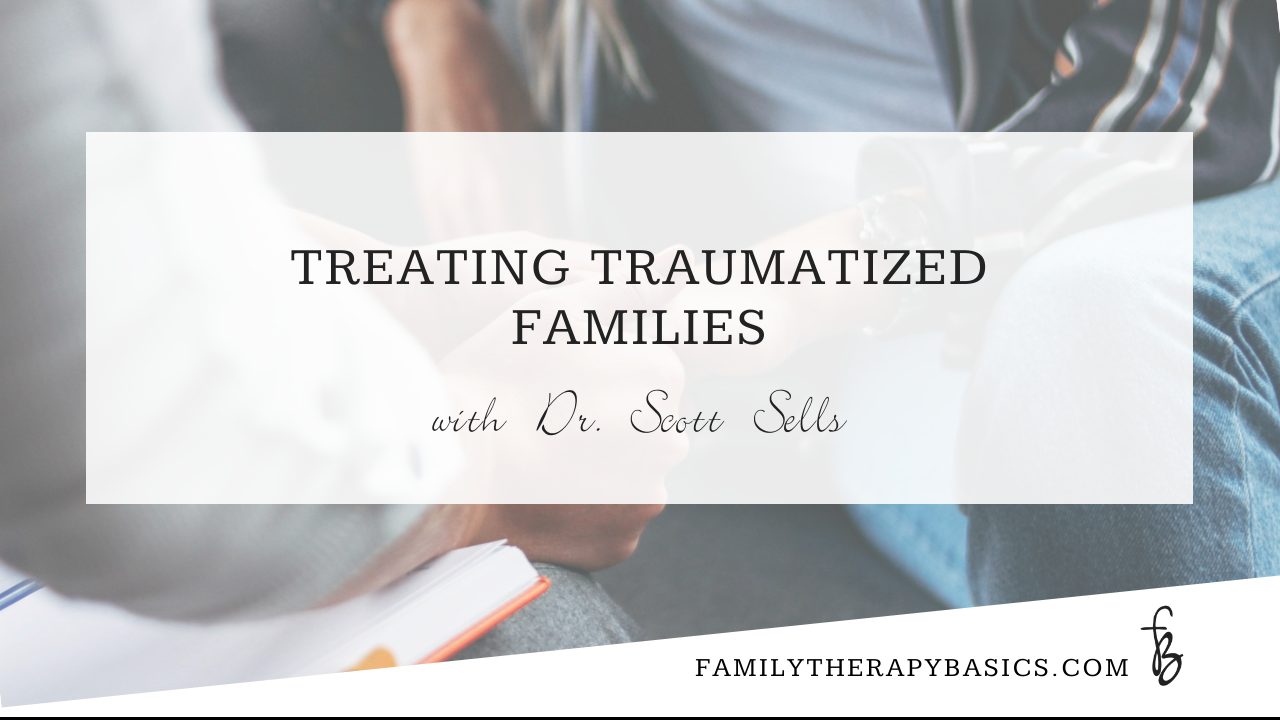
Treating Traumatized Families: An Introduction to the Family Systems Trauma Model (FST), with Dr. Scott Sells

March 4, 2021 Ili Rivera Walter, PhD, LMFT
Treating Traumatized Families with Dr. Scott Sells

Dr. Scott Sells, PhD, LCSW, LMFT is my interview guest for this post. He is the founder of the Family Systems Trauma Model, and the Family Trauma Institute, as well as the author of three books on methods for treating families and children, within the context of family therapy.

By watching this video, or reading the transcript, you will learn:

  • A working definition of the term traumatized family

  • Three essential steps you may be missing in your clinical work with families.

  • One thing you can do right now to improve engagement and outcomes with your family clients.

  • How to learn more techniques that will revive your family therapy work.
Introduction

Ili: Today, I have Dr. Scott Sells with me. He is the founder of the Family Systems Trauma Model, and most recently, the author of Treating the Traumatized Child. 

Hey, Scott! Thanks for being with us.

Scott: Hey. How are you? I'm so appreciative for letting me come and chat with your community, your tribe, your village, today. 

What is a “Traumatized Family?”
Ili: So, yeah. I'm really excited for them to learn more about your work. As you know, I was introduced to your writing when I, myself, was completing my master's program. And, that was your—was it your first book, Treating the Tough Adolescent?

Scott: Treating the Tough Adolescent, yeah.

What is a “traumatized family?”

Ili: Yeah. And so now we get to talk about this fully developed model, which i'm excited about. So first, could we start with the basics? I'd like you to share more about what you mean by the term “traumatized family.” 

Scott: That's a great question right off the bat, because it's oftentimes not understood clearly. So, for me, right out of graduate school, I was really focused on the individual, client-centered model. That when a child had a symptom, I would work with the child. In fact, I even went way back to the beginning of just doing play therapy; very non-directive. 

And so, what happened would be is, I got more and more interested in the kids that had symptoms of Oppositional Defiant, Conduct Disorder, because I myself was like that when I was a kid. And so, the traumatized family became that there was a dance going on between the parents and child. And, I'll never forget Salvador Minuchin, who started Structural Family Therapy, would ask the systemic question of the year, “How do you help your child misbehave?”

You know, so I started seeing, in my first job which was at an alternative school, that I really love cognitive behavioral therapy, and my work integrates that using anger management tools for the kiddos. But, then, when they would go home for the summer, I'd almost have to start all over again, because I saw the family as the whole is greater than the sum of the parts. And so, necessity requires change. 

And so, I went back to graduate school, so I could learn high level family therapy, because it scared me to death. But I knew I had to do it if I was going to create second order change in the kids and families—where the change stuck after I was done. So that's, to me, the traumatized family, or the family is the influence the interaction between parent and child that occurs in families like a living breathing organism. 

What steps do therapists often miss when working with families?


Ili: Thank you. What are the steps that therapists and counselors often miss when they're working with these families? 

Scott: I think there's three:

1 | The first one is how treatment starts.

It's often a harsh startup. So, what we found is—my research is grounded theory, which means that I go to the actual clients and get their help to build the model (which is called the Family Systems Trauma Model). And, they told me that the first phone call was abysmal. Where, the idea is “people don't care how much you know until they know how much you care.” 

And so, the traditional motivational interviewing was very non-directive. So, we came up with a seven question script that starts off with questions like: “If we get to know you better, what qualities would we come to admire about you?”

Parents weren't expecting that, because the tradition was parents just come in and say, “Fix my kid.” They won't engage. But, when we looked at it—even John Gottman's work is really cutting edge around how we start a relationship off—soft startup versus harsh startup. So, we developed these questions that prepare a family to come in in a soft, ready to change way. And it's amazing. For therapy to end properly, it must begin properly.

2 | Get the family engaged immediately, with actual scripts

Secondly is, we have to have a way to get the family engaged right out of the gate. So, when families come in, they're very emotionally charged up. And so, if you ask that traditional question: Why are you here? What's the goal?, metaphorically, we'd see families, like, even emotionally throw up on each other. They immediately attacked the kid, they'd attack each other, and you'd lose control of the session in 3.5 seconds. So, having the family come in soft with the motivational phone call. 

And then using a technique called the FST (Family Systems Trauma) Stress Chart, allows families to look up on the board and say, “On a scale of zero to 100 percent, how stressed out are you right now with your child?” And people are able to look at the board, “I'm 90 percent stressed, a hundred percent stressed.” So, it empowers everybody's voice to look up on the board and put a mark.

And then, it helps the therapist to say, “Okay. You said 100 percent stress, Mom. Let's break it down into the top three.” So, the second tool that's missing is actual scripts for somebody who's never done family therapy, or even seasoned therapists to have a systematic, directive approach that settles the family down, and moves them to see the problem not as a kid problem, but a family solution.

Ili: That’s key.

Scott: Yeah.

3 | Offer organized, written steps, and have the family practice

And then the third thing, yeah, and the third thing is: The family now goes to “Now what? Now that you've helped us see what's driving it, now what?” And so, another technique is called an FST Playbook, and this comes from Haley's work with Strategic Family Therapy. He would self-design directives, or techniques, to change the dance. And so one of them might be the parent and child are engaged in an all-out conflict of a lack of attachment, or nurturance. So, you have to give the parent and child an antibiotic, which we call positive child report. Where the family catches their child doing something right, and hands the child a certificate. And, it's not the intervention, it's the organized step-by-step written dance move.

And then the third: You've gotta then also have role plays, dress rehearsals. You can't expect a family to dance differently without a clear playbook and a clear coach. We don't do this in the acting world, so why would we do it in the real world? And so, those are tools that are missing from families, our family work, that we saw.

Ili: Yeah. So one of the things that your model really does is explains things in a step-by-step fashion and gives tools for each step. 

Scott: Yeah. Even the transition sentences. Because somebody once said to me: In order to be spontaneous, I mean, I need to be structured first. And what that simply means is “paint the fence, sand the fence.” 

Ili: Yes, yes, I think that's true in every craft, skill, uh, what have you.

One thing you can do right now to improve your work with families

So, you likely already answered this, because you just gave, you know, several things that therapists can begin doing. But, as I was, you know, putting questions together for speaking with you, one of the things that I was wondering, you know: Is there one thing that therapists can do, maybe something simple, beginning today, you know, those that are watching this video, in order to either improve engagement or improve their outcomes with families? Because, I think, like you, there are many family therapists and MFTs that don't see families, because there could be a fear there. Is there even just one thing they could begin to do now that would dissipate that fear, or improve their engagement, or their outcomes. 

Scott:  Yeah. I think confidence rises with success. And so, I tried to make it really easy.

Obviously, people can order the book off Amazon, Treating the Traumatized Child. But that, today, when we're so drowning in information, it's really hard to sit down and read a 365 single spaced book. But some people like that, you know.

But for me, the most dynamic way to learn is to see it. And so, if you go to familytrauma.com, there'll be short articles on some of these techniques, like the motivational phone call, that has the script, and you can begin immediately.

And then, the thing I'm most excited about is: I put my sweat and toil into designing an online self-paced 12 module course, because I saw people love to see video clips of the techniques with real families, with worksheets, and then apply it immediately. And, I was skeptical about it at first, but we've had a lot of graduates, and they're like, “That's been the game changer! It's bite-sized. I can consume it easy, and I get quick results, and I'm part of a community.” Because, I have office hours every Friday, and Iget to have the benefit to be like a family systems trauma coach. And, I love that! Absolutely love it.

Ili: And, through this course then therapists are able to learn your model and these techniques that you're referring to? 

Scott: Yeah. They're broken up—12 modules, 12 core techniques. So, if they want to learn the motivational phone call, they go to module 2, they watch the video—it's 20 minutes, they click on to get their CE unit certificate, and then they have a worksheet, they see it being done with a real case, and then they're ready to go immediately.

And, if they get stuck, they come on Fridays, either on demand or live, and say, “Scott, I tried the technique, and the family threw me a curveball. Now what?” And so then, they get part of a community of other students who are also there to help each other out. And so, it becomes a transformational catalyst to create a family trauma community of counselors who work together. And I get to be, you know, the facilitator of that. So, it's really fun for me. 

Ili: Well, that's wonderful. Thank you so much for sharing more about that--about your work and about this upcoming course. 

Is there anything else that you'd like to add that I didn't ask?

Scott: I just want to thank you guys for what you do. I mean, family therapy is on the endangered species list. Uh, Jay Haley, who's the founder of Strategic Family Therapy, before he died, said that family therapy had so much promise in the 80s. We oftentimes didn't have the research that we needed behind it; it was kind of like a rock star status type of thing. But, I think today, as we prepare for rain, and it's already coming, that we're going to see more and more traumatized families and communities that are going to need a systems approach.

And even the idea of COVID, the idea of social distancing—human beings have to have that contact, and right now, it's broken. So, our role of bringing this together, family therapy, has never been needed more than today. And so, I appreciate your group to come together and further [the work]. And if I can play one small part, I'm glad to do that.

So, I was looking forward to today, to talk and give you guys encouragement, because this is not easy work. But, nothing good comes easy. But, if you don't do it, who will? And so, I just, I'm really worried for our families, but I'm also hopeful, because I think we have an army of people who are starting to learn this approach. So, thank you. 

Ili: Ah. Perfectly said and inspiring as always, Scott. Thank you so much for your time today.

Scott: Thank you. Have a great day everybody!


For more on the Family Systems Trauma (FST) Model:

  • Click here for a replay of the webinar

  • Visit FamilyTrauma.com for free articles

  • Take a look at the FST Advanced Training course.


*Affiliate Disclosure: Amazon affiliate links are used throughout this post to recommended books. If you choose to use our links to purchase a book, Family Therapy Basics will earn a small percentage of your purchase, which goes toward supporting the free resources offered on this site. I appreciate your support, whether by purchasing, reading, or sharing!

*I only feature clinical experts whose work I believe is valuable and transformational for therapists. Please contact me with any questions.


Let’s Chat!

  • What kind of clinical work do you do with families?

  • Is fear holding you back from engaging families in clinical work?

  • Questions? Comments? Please post them below.


Join the free resource library, to download blog summaries, cheat sheets, guides, and more!


RELATED POSTS
How To Address Therapy Clients' "Undercurrents" and Stress In Therapy

Feeling confident when offering therapy to families is a goal for many therapists and counselors. When we face the limitations of an individual perspective on treatment, we are left to wonder, “What theory, or techniques, can help this client comprehensively?”

Dr. Scott Sells explains two techniques from the Family Systems Trauma Model (FST) that will reframe family problems and help lead to second-order change. FST is applicable to your work whether you see individuals, couples, or families.

Read more →
The Importance of Using Metaphors and Metaphoric Tales as a Therapeutic Intervention

Metaphor is a figure of speech that consists of naming, describing, or qualifying something through its similarity or analogy to something else. It’s not just about songwriting or poetry-- we use metaphors all the time. After all, we all “fall in love” or “get stuck” at some point in our lives.

In the psychoanalytic approach, metaphors have always been very important, since the unconscious mind is

Read more →
Family Therapy Basics Research RoundUp: Winter 2020

This post includes brief summaries of four articles, and two books I read recently. Three articles are from 2017, and one article is from 2019. I found the articles from 2017 as I researched topics for a few classes I was teaching last fall.

All articles are from the Journal of Marital and Family Therapy. As a MFT, I always start my research in this journal.

My regular disclaimer for these posts is: While MFTs are referenced throughout the summaries, the information is relevant to all psychotherapists, regardless of discipline.

Read more →
Trauma and Ambivalence In Therapy, with Dr. Robert T. Muller

In the following video, my guest is Dr. Robert T. Muller, author of Trauma and The Struggle to Open Up. Dr. Muller and I discuss the topic of clients’ ambivalence toward their trauma histories, how this ambivalence is challenged, naturally, through clients’ life experiences, as well as how the ambivalence may show up in the therapeutic encounter.

To view the video, or read the transcript,


Read more →
Are Gottman Method and Emotionally Focused Therapy (EFT) Compatible?

Couples counseling today is so much more effective than in decades past.  There is almost too much information out there to guide therapists. It can be overwhelming.  

I have seen many discussions about two of the main therapeutic models for couple therapy:  Sue Johnson’s Emotionally Focused Couple Therapy, and John and Julie Gottman’s Gottman Method.  The discussion can be, like so many discussions, very polarized at times. But there is such a richness and joy to learning from both (not to exclude all of the other contributors to the field right now) that the idea of folding together some of what these models offer seems inevitable.

Read more →
How to Use The Systemic Therapy MicroSkills: The Joining Skills, Part 2

Series Intro

Dr. Schooley and her co-author, fellow professor and family therapist, Jim Hibel, are currently writing a book on the small systemic skills that therapists can intentionally practice in order to increase their effectiveness. In this video series, we review the systemic therapy skills that will be included in their book.

If you haven’t already read, or viewed, part one from this series, do that now!

Read more →
How to Use The Systemic Therapy MicroSkills: The Joining Skills, with Dr. AnnaLynn Schooley

This post is the first of several articles in which I discuss the systemic therapy microskills, with Dr. AnnaLynn Schooley.

Dr. Schooley and her co-author, fellow professor and family therapist, Jim Hibel, are writing a book on the small systemic skills that therapists can intentionally practice in order to increase their effectiveness.

Read more →
Six Steps For "Socioculturally Attuned" Family Therapy: A Summary

Socio-cultural factors influence almost all significant relational interactions between clients and themselves, clients and their significant others, as well as clients and therapists. Language, economic status (and sense of mobility), ethnicity, gender, privilege, among other identities through which clients (and therapists) navigate their realities intersect in therapeutic interactions.

Failure to name and discuss these factors leaves clients to continue entrenched stories of self and relationships, and limits clients’ options for negotiating their needs and pursuing their sought-after changes.

Read more →
How To Structure Therapy, So Parents Will Participate

For today’s post, I chatted with Kristin O’Rourke, a licensed clinical social worker in the state of New York. Kristin heads a group practice in Rockland County, where she and her team specialize in working with children and families.

Included in this post is a section of our conversation, during which Kristin details how she engages parents in therapy, when a child is the identified patient.

Read more →
Mindfulness Tips for Therapists, for Work and Life

Mindfulness is popular.

You likely have worksheets, lessons, techniques, and theories that help your clients understand mindfulness and its benefits.

You understand mindfulness and its benefits.

But, as we therapists know, sometimes understanding doesn’t foster motivation, or change. The fact is, therapists struggle to implement mindfulness, along with a “self-caring” lifestyle (Kissil and Niño, 2017).

Read more →
Linear vs. Circular Causality: Systemic Therapy Series

Lately, I’ve been reviewing the history of the marriage and family therapy (MFT) field. Including the stories of MFT pioneers, the shift represented in the field from treating the individual to treating the system, and the core concepts that mark systemic thinking and systemic therapy.

It’s been fun!

I’ve decided to begin a systemic therapy series to review the major concepts of systems theory, as well as how to begin and maintain the systemic perspective.

Read more →
How To Write A Therapy Case Summary

Conceptualizing a case systemically can be challenging, because of the many family members and influences that are relevant to our work with clients. In the practicum courses I teach, students are required to write a case summary and present the case to the class. In this post, I outline and explain the sections of the case summary assignment.

Read more →

If you enjoyed this post, please share it! Thank you!

In Theory Tags new
← Contracts and Non-Competes: What's a New Therapist to Do?Technology-Assisted Clinical Supervision: Benefits, Challenges, and Regulations →
Interested in information that clarifies, simplifies, and enhances your therapy work? You're in the right place. Learn more . . .

Interested in information that clarifies, simplifies, and enhances your therapy work?  You're in the right place.  Learn more . . .


S A Y H E L L O


S U P P O R T T H E B L O G

DONATE ANY AMOUNT

B L O G S P O N S O R S

Thera-link | Family Therapy Basics

A F F I L I A T E S


P O P U L A R  P O S T S

Blog
10 Therapist (and Child)-Approved Activities to Support Kids with Anxiety

If you’re a mental health professional working with children, you will probably agree that many of the calls you receive from parents have something to do with anxiety or stress. Child therapists have the amazingly important yet challenging task of educating and supporting kids in a therapeutic setting that is both productive and fun. When working with children as young as preschool age, it can be a very daunting task to keep things fresh and exciting week after week! So, how do we help children develop the coping skills they need while keeping them engaged (and not glancing at their watch)? Here are ten therapist (and child!)-approved, fun activities that address anxiety-based disorders and promote relaxation and stress reduction in children:

Read more →
The Art and Science of Therapy as Craft, Part 2:  Crafting Questions
The Art and Science of Therapy as Craft, Part 2: Crafting Questions

For this week's video chat, Dr. AnnaLynn Schooley returns to discuss therapy questions as an intentional craft, and she covers four basic question types:  single answer, open, closed, relational, and circular.

Read more →
Therapist Self-Disclosure Simplified

Self-disclosure is a touchy subject among therapists. Some therapists never self-disclose, while others feel stifled by having a rigid boundary around self-disclosure.  As I consider self-disclosure in therapy, I ask myself, “When is self-disclosure appropriate?”  “How does self-disclosure deepen the therapist-client connection?"

Read more →
Solution Focused Brief Couples Therapy Tips, with Elliott Connie

Elliott Connie is a Solution Focused Brief Therapy (SFBT) practitioner, author, and speaker.  He developed an approach to couples work that distills the essence of SFBT into guiding principles for working with couples. 

As a therapist who loves working with couples, I am always interested in ways to enhance my couples therapy skills.  For this reason, I invited Elliott to explain the reasons why SFBT is his choice for working with clients, as well as how it creates a contrasting experience for couples that have a history in therapy.

Read more →
Family of Origin Exploration for the Therapist:  How to Create Your Genogram
Family of Origin Exploration for the Therapist: How to Create Your Genogram

In article three of the Family of Origin for the Therapist series, you learned 3 simple steps for how to begin family of origin (FOO) exploration:  1) read Bowen’s chapter, 2) observe your FOO experience, and 3) reflect on what you learned. Hopefully, your curiosity has led to significant understanding.

Understanding is the foundation of Bowen Family Systems Theory (BFST). Bowen (1985) believed that if clients could understand themselves as members of their FOOs and as created by their histories, they could begin and continue significant change. 

In today’s post, I offer the next step in developing understanding:  Creating your genogram. I explain how to create a basic genogram that you can expand as you continue your exploration.  

Read more →
5 Tips for Keeping Up with Therapy Paperwork

In my interaction with therapists as a mentor and supervisor, I’ve learned that one of the main struggles therapists face is having too much work and not enough time. Many therapists find themselves overwhelmed by documentation responsibilities, in particular; this includes completing client notes, referrals, billing, treatment plans, etc.

In today’s post, I offer several strategies for keeping up with paperwork, so that you can stay on track and avoid the stress of falling behind.

Read more →
Solution-Focused Brief Therapy Client Types, and Their Relevance To Every Session

In her 1989 article, Of Visitors, Complainants, and Customers, Insoo Kim Berg details three types of “client-therapist relationships” (p. 21). Her wording is significant, because she is not labeling clients; she is describing them in terms of their relationship to the therapist, the process of therapy, and the problem. These three relationships have undergirded Solution-Focused Brief Therapy theory and interventions over the years, although they are not consistently discussed in newer works. The client relationship types are widely applicable to therapy, regardless of theoretical orientation, making them one of the most useful concepts in marriage and family therapy.

In this post, I present a review of these client types, and I explain their relevance to and usefulness for all therapeutic sessions.

Read more →
How to Ethically Offer Coaching as a Licensed Therapist:  A Step-By-Step Guide
How to Ethically Offer Coaching as a Licensed Therapist: A Step-By-Step Guide

One of the most common professional goals for my clients is expanding their private practice to include life coaching services. As professionals with a depth of knowledge in personal development and goal achievement strategies, therapists are ideal candidates for the coaching profession. Despite this near perfect fit, there are some important ethical consideration for therapists when offering coaching services alongside therapy, or when choosing to become professional coaches. In this post, I focus on offering solutions for these complications, in an effort to help you ethically practice coaching.

Read more →
5 Step Plan for De-escalating an In-Session couple Argument

Most of us, therapists, have been there:  A simple disagreement turns into an all-out screaming match in the middle of a therapy session. This is, thankfully, not a common scenario for most therapists, but it’s also not rare--especially for therapists who specialize in couple therapy.

In this post, I cover steps for disrupting an argument occurring in a couple therapy session. Intervention on the part of the therapist is necessary during some conflicts, because the arguments can cause further damage in the couple relationship. And, if therapists allow arguments to continue for too long, they can affect the couple’s sense of safety when in therapy.

The main goals of intervention in this case are to:

Read more →

#5 on Feedspot's Top 40

 Family Therapy Blogs

T O O L S  WE  L O V E

SEE THE LIST

I N S T A G R A M

@driliwalter

I was speaking with a couple this week, and the wife explained that she retaliated toward her husband, because she wanted him to feel the way she feels when he does the same thing to her.

Of course, when we feel unheard, we will result to desperate
Focusing on changing our partner is a waste of energy. We can make requests and express our desires, but when this turns into consistent criticism, it harms everyone involved.

Oftentimes, wanting to change another stems from our own unhappiness. Ins
Sure, it makes sense that when spouses are best friends, the first thing we wonder is if they are isolating from having interests outside their relationship. In reality, many couples who are each other's best friends do enjoy separate activities and
Safe connection is a gift that heals us. ♥️
@realterryreal

COPYRIGHT 2016, FAMILY THERAPY BASICS | ALL RIGHTS RESERVED

ABOUT SUBMISSIONS PARTNERSHIPS

copyright © 2016-2025 | Family Therapy Basics | All Rights Reserved | Legal, Privacy, + Disclaimer | Site Credits, Affiliations, + Stuff