• Home
  • Blog
  • Free Library
  • Contact
Menu

Family Therapy Basics

1830 North University Drive
Plantation, FL, 33322
Phone Number
Save Time and LOVE Your Work

Your Custom Text Here

Family Therapy Basics

  • Home
  • Blog
  • Free Library
  • Contact

7 Questions for Opening Your Therapy Sessions

November 15, 2016 Ili Rivera Walter, PhD, LMFT
7 Questions for Opening Your Therapy Sessions

Originally published November 15, 2016. Updated October 20, 2022.

It's natural to sometimes get stuck in a rut with specific elements of therapy structure, such as what you use for an opening question.

I have a mentor that views every interaction with a client as part of the therapeutic relationship, and therefore, he interacts intentionally with his clients always, choosing his language and messages carefully based on their therapeutic value.  

We don't all view our relationships with our clients in the same way, which means this type of scrutiny may not seem necessary to all of us; however, there is merit in evaluating the details of our sessions in order to become aware of habits that may not be yielding the results we desire.  

For example, it’s common for opening questions to become casual greetings rather than relationally impactful interactions between therapist and client. Purposeful opening questions are the topic of this post.

To therapists I know, I recently posed the question, “What is your favorite question for opening a session?” A few examples on this list came from members of the group; the other questions are ones that I’ve used, or heard others use, in my years of practice and supervision. The following questions fall into three categories:  goal-oriented, relationship-oriented, and evaluation-oriented.

1 |  Goal-oriented opening questions

  • What are your best hopes for our talk today? (solution oriented)

  • What would you like to be different when you walk out of here today? (change oriented)

  • What is your main concern today? (problem oriented)

These questions spotlight an area of focus for the client that, when identified, will help the therapist have a sense of the clients' goal. In this way, the therapist begins the session by setting a specific topic (or goal) for the therapeutic conversation. In addition, each goal-oriented opening question assists clients in finding a subject for which they are customers.

2 | Relationship-oriented opening questions

  • Whose idea was it for you to be here today? (for an initial session)

  • Who is with you in this room today (figuratively speaking)?

With these questions, the therapist immediately invites the client's relational realities into the therapy room, and the therapeutic conversation, by addressing the relational influences that brought the client to therapy, as well as those that are significant for the client.

3 |  Evaluation-oriented opening questions

  • So, what's been going well? (solution-oriented)

  • What is different today from the last time you were here? (change-oriented)

  • What, from last session, impacted you this week? (change-oriented)

Beginning the session with these questions allows the therapist to evaluate the clients' experience, including their perspectives on their lives and relational interactions (1), their observations of change between sessions (2), and their experiences of and relationship to the therapeutic process (3). All evaluation-oriented questions provide practical information for the therapist regarding how therapy, and clients' sense of the value of therapy, are developing.

Summary

I've listed 7 questions for opening therapy sessions that are useful for providing focus to the therapist and the subsequent therapy session. These questions are a reminder of the power of questions to bring forth information that generates and maintains therapeutic structure and progress. (For more information on the topic of structure, see Napier and Whitaker's, The Family Crucible).


Let's Chat

Let me know in the comments below:

  • What's your favorite question for opening a therapy session?

  • Which of these questions will you try this week?


Grab the free printable summary of this blog post, with a list of questions. in the Free Resource Library. Sign up, below:


References

Nelson, T. S., Fleuridas, C., & Rosenthal, D. M. (1986).  The evolution of circular questions: Training family therapists. Journal of Marital and Family Therapy, 12(2), 113-127.

RELATED POSTS
Discernment Counseling for "Mixed Agenda" Couples: An Introduction

In my group practice, I sometimes create trainings on relevant topics for my staff, especially when I see an increase in a specific presenting problem for our clients, and/or I recognize an opportunity to expand our services.

Recently, I offered a training on discernment counseling, a pre- couple therapy approach, developed by Bill Doherty and Steven Harris, for helping couples who are presenting with mixed agendas; that is, one partner wants to work on the relationship, or is “leaning in,” and one partner is not sure, or is “leaning out.”

Read more →
Terry Real's Couple Experiential: Five Lessons For Therapists

Recently, I attended a Terry Real Couple Experiential. The Couple Experiential is a two-day couple therapeutic experience that involves five couples--each receiving therapy from Terry Real, in the presence of the other four couples, as well as therapist observers.

Terry works intensely, for at least one hour, with each couple throughout the two days. He also answers therapists’ questions two hours per day: during a lunch hour, and for one hour at the end of the couple therapy time.

Read more →
Family Therapy Basics Research Roundup: Summer 2020

It’s time for another research roundup!

This Spring, I taught Research and Analysis for the first time, to graduate MFT students. And, as expected, I I enjoyed it. I realize, as a former student myself, that grad students come to Research with many misconceptions. So, I began the first class with Brené Brown’s The Power of Vulnerability.

Read more →
Tips And Encouragement for Student Therapists

Students starting their first field course (i.e., seeing clients for the first time) typically experience nerves, confusion, and/or worry. Worry that they won’t be helpful to clients, or don't know enough to provide effective therapy, as well as general anxiety about managing their studies, sessions, and often, the necessary assertiveness required to complete their clinical hours.

An email subscriber in her first field experience emailed me recently to request an article on tips for first-time counselors. In this post, I cover tips that I’ve learned as a therapist and supervisor, as well as those offered to brand- new therapists, by members of the Get Refreshed Facebook Group.

Read more →
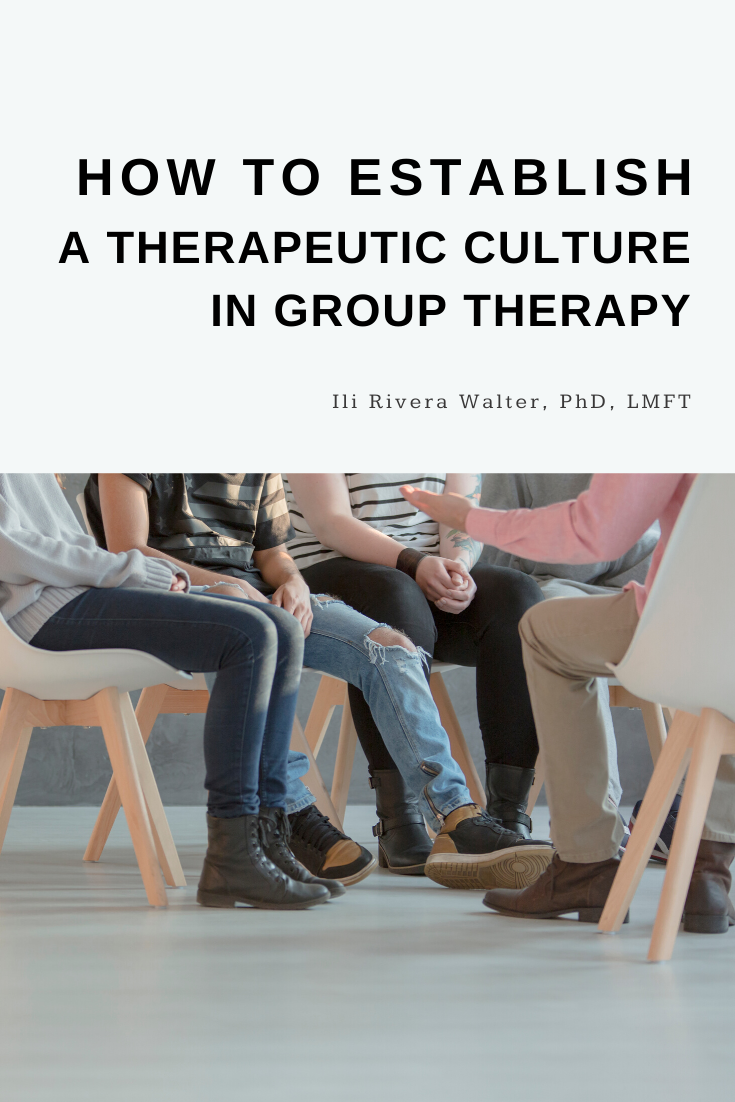
How to Establish a Therapeutic Culture in Group Therapy

One of the main roles of a group therapist is establishing the group's culture. Group culture is influenced by the group's structure (i.e., a closed vs. an open group), meeting schedule, and explicit and implicit rules. Both group members and therapist contribute to the culture over time; however, the therapist plays the lead role in setting both the tone and structure of the group.

Read more →
The Art and Science of Therapy as Craft, Part 2:  Crafting Questions
The Art and Science of Therapy as Craft, Part 2: Crafting Questions

For this week's video chat, Dr. AnnaLynn Schooley returns to discuss therapy questions as an intentional craft, and she covers four basic question types:  single answer, open, closed, relational, and circular.

Read more →
Therapist Self-Disclosure Simplified

Self-disclosure is a touchy subject among therapists. Some therapists never self-disclose, while others feel stifled by having a rigid boundary around self-disclosure.  As I consider self-disclosure in therapy, I ask myself, “When is self-disclosure appropriate?”  “How does self-disclosure deepen the therapist-client connection?"

Read more →
The Art and Science of Therapy as Craft

Dr. Anna Lynn Schooley, professor and family therapist, joined me recently for a conversation about therapy as a craft.  AnnaLynn is a professor, clinical supervisor, licensed therapist in mental health and marriage and family therapy.  She identifies as a family therapist; as a result, our chat leans toward a systemic view of therapy and clients.  

Recently, I have been hearing more and more that master therapists view therapy as a conversational craft.  Bill Doherty mentioned it in a talk he gave in November of 2016, and Elliott Connie also emphasizes this point.  I invited AnnaLynn to discuss this topic, because she is a master therapist and teacher.

Read more →
Unique Characteristics of Cohabiters Seeking Therapy:  A Synopsis
Unique Characteristics of Cohabiters Seeking Therapy: A Synopsis

The January issue of the Journal of Marital and Family Therapy included an article by Shannon and Bartle-Herring, in which they present result from their study on the differences between cohabiting and married couples in therapy.  The article's title is Unique Characteristics of Cohabiters Seeking Therapy, and in this post, I summarize the authors' conclusions and present implications for therapists.

Read more →
Couples and Understanding:  Cultivating Presence in Therapy
Couples and Understanding: Cultivating Presence in Therapy

As a couples' therapist, I've seen many couples in therapy over the years.  And, I've noticed that many of these couples have this in common:  One or both members of the couple have negative beliefs about their partner, because they've interpreted some of their partner's personal characteristics as character flaws.  


Read more →
Solution Focused Brief Couples Therapy Tips, with Elliott Connie

Elliott Connie is a Solution Focused Brief Therapy (SFBT) practitioner, author, and speaker.  He developed an approach to couples work that distills the essence of SFBT into guiding principles for working with couples. 

As a therapist who loves working with couples, I am always interested in ways to enhance my couples therapy skills.  For this reason, I invited Elliott to explain the reasons why SFBT is his choice for working with clients, as well as how it creates a contrasting experience for couples that have a history in therapy.

Read more →
Four Systemic Steps for Addressing Anxiety with Therapy Clients

From a systems theory perspective, we, as individuals, exist within a network of relationships and relational interactions. It is within these relationships that problems occur and reside; it is also within these relationships that solutions are generated and maintained (Becvar, 1998).

A systemic approach for guiding clients through addressing, managing, and living well with anxiety takes into consideration not only clients’ relationships with themselves and significant others, but also their relationships with anxiety.

Read more →
 
 
In training, skills Tags therapy, top, featured
← Four Systemic Steps for Addressing Anxiety with Therapy Clients5 Tips for Keeping Up with Therapy Paperwork →
Interested in information that clarifies, simplifies, and enhances your therapy work? You're in the right place. Learn more . . .

Interested in information that clarifies, simplifies, and enhances your therapy work?  You're in the right place.  Learn more . . .


S A Y H E L L O


S U P P O R T T H E B L O G

DONATE ANY AMOUNT

B L O G S P O N S O R S

Thera-link | Family Therapy Basics

A F F I L I A T E S


P O P U L A R  P O S T S

Blog
10 Therapist (and Child)-Approved Activities to Support Kids with Anxiety

If you’re a mental health professional working with children, you will probably agree that many of the calls you receive from parents have something to do with anxiety or stress. Child therapists have the amazingly important yet challenging task of educating and supporting kids in a therapeutic setting that is both productive and fun. When working with children as young as preschool age, it can be a very daunting task to keep things fresh and exciting week after week! So, how do we help children develop the coping skills they need while keeping them engaged (and not glancing at their watch)? Here are ten therapist (and child!)-approved, fun activities that address anxiety-based disorders and promote relaxation and stress reduction in children:

Read more →
The Art and Science of Therapy as Craft, Part 2:  Crafting Questions
The Art and Science of Therapy as Craft, Part 2: Crafting Questions

For this week's video chat, Dr. AnnaLynn Schooley returns to discuss therapy questions as an intentional craft, and she covers four basic question types:  single answer, open, closed, relational, and circular.

Read more →
Therapist Self-Disclosure Simplified

Self-disclosure is a touchy subject among therapists. Some therapists never self-disclose, while others feel stifled by having a rigid boundary around self-disclosure.  As I consider self-disclosure in therapy, I ask myself, “When is self-disclosure appropriate?”  “How does self-disclosure deepen the therapist-client connection?"

Read more →
Solution Focused Brief Couples Therapy Tips, with Elliott Connie

Elliott Connie is a Solution Focused Brief Therapy (SFBT) practitioner, author, and speaker.  He developed an approach to couples work that distills the essence of SFBT into guiding principles for working with couples. 

As a therapist who loves working with couples, I am always interested in ways to enhance my couples therapy skills.  For this reason, I invited Elliott to explain the reasons why SFBT is his choice for working with clients, as well as how it creates a contrasting experience for couples that have a history in therapy.

Read more →
Family of Origin Exploration for the Therapist:  How to Create Your Genogram
Family of Origin Exploration for the Therapist: How to Create Your Genogram

In article three of the Family of Origin for the Therapist series, you learned 3 simple steps for how to begin family of origin (FOO) exploration:  1) read Bowen’s chapter, 2) observe your FOO experience, and 3) reflect on what you learned. Hopefully, your curiosity has led to significant understanding.

Understanding is the foundation of Bowen Family Systems Theory (BFST). Bowen (1985) believed that if clients could understand themselves as members of their FOOs and as created by their histories, they could begin and continue significant change. 

In today’s post, I offer the next step in developing understanding:  Creating your genogram. I explain how to create a basic genogram that you can expand as you continue your exploration.  

Read more →
5 Tips for Keeping Up with Therapy Paperwork

In my interaction with therapists as a mentor and supervisor, I’ve learned that one of the main struggles therapists face is having too much work and not enough time. Many therapists find themselves overwhelmed by documentation responsibilities, in particular; this includes completing client notes, referrals, billing, treatment plans, etc.

In today’s post, I offer several strategies for keeping up with paperwork, so that you can stay on track and avoid the stress of falling behind.

Read more →
Solution-Focused Brief Therapy Client Types, and Their Relevance To Every Session

In her 1989 article, Of Visitors, Complainants, and Customers, Insoo Kim Berg details three types of “client-therapist relationships” (p. 21). Her wording is significant, because she is not labeling clients; she is describing them in terms of their relationship to the therapist, the process of therapy, and the problem. These three relationships have undergirded Solution-Focused Brief Therapy theory and interventions over the years, although they are not consistently discussed in newer works. The client relationship types are widely applicable to therapy, regardless of theoretical orientation, making them one of the most useful concepts in marriage and family therapy.

In this post, I present a review of these client types, and I explain their relevance to and usefulness for all therapeutic sessions.

Read more →
How to Ethically Offer Coaching as a Licensed Therapist:  A Step-By-Step Guide
How to Ethically Offer Coaching as a Licensed Therapist: A Step-By-Step Guide

One of the most common professional goals for my clients is expanding their private practice to include life coaching services. As professionals with a depth of knowledge in personal development and goal achievement strategies, therapists are ideal candidates for the coaching profession. Despite this near perfect fit, there are some important ethical consideration for therapists when offering coaching services alongside therapy, or when choosing to become professional coaches. In this post, I focus on offering solutions for these complications, in an effort to help you ethically practice coaching.

Read more →
5 Step Plan for De-escalating an In-Session couple Argument

Most of us, therapists, have been there:  A simple disagreement turns into an all-out screaming match in the middle of a therapy session. This is, thankfully, not a common scenario for most therapists, but it’s also not rare--especially for therapists who specialize in couple therapy.

In this post, I cover steps for disrupting an argument occurring in a couple therapy session. Intervention on the part of the therapist is necessary during some conflicts, because the arguments can cause further damage in the couple relationship. And, if therapists allow arguments to continue for too long, they can affect the couple’s sense of safety when in therapy.

The main goals of intervention in this case are to:

Read more →

#5 on Feedspot's Top 40

 Family Therapy Blogs

T O O L S  WE  L O V E

SEE THE LIST

I N S T A G R A M

@driliwalter

I was speaking with a couple this week, and the wife explained that she retaliated toward her husband, because she wanted him to feel the way she feels when he does the same thing to her.

Of course, when we feel unheard, we will result to desperate
Focusing on changing our partner is a waste of energy. We can make requests and express our desires, but when this turns into consistent criticism, it harms everyone involved.

Oftentimes, wanting to change another stems from our own unhappiness. Ins
Sure, it makes sense that when spouses are best friends, the first thing we wonder is if they are isolating from having interests outside their relationship. In reality, many couples who are each other's best friends do enjoy separate activities and
Safe connection is a gift that heals us. ♥️
@realterryreal

COPYRIGHT 2016, FAMILY THERAPY BASICS | ALL RIGHTS RESERVED

ABOUT SUBMISSIONS PARTNERSHIPS

copyright © 2016-2025 | Family Therapy Basics | All Rights Reserved | Legal, Privacy, + Disclaimer | Site Credits, Affiliations, + Stuff